Recall your own days in school – what stands out most in your memory? Was it memorization of formulas or solving math problems? Or was it the time you were onstage, trembling as well as overwhelmed because you wanted to give the best possible debate performance of your young life, hoping for the thrill of success, the reward of knowing you had figured out how to score that last-minute goal that would lead the team to victory, or the lessons you learned about the importance of teamwork while working on a science fair project with your friends?
Education is never just about academics. While academic excellence in schools is the bedrock of learning, the world also requires a bit more than higher grades today. It calls for problem-solvers, communicators, innovators, and empathetic leaders. It is where the actual evolution in schooling rests: going beyond the textbook to create a greater learning context that prepares kids not just with knowledge but also with the skills to use that knowledge intentionally.
Ours is an age of lightning-fast changes in the workplace. In a few years down the line, the jobs our kids will apply for don’t even exist today. Preparing students for the future is as much about adaptability as academics. The capacity to unlearn and relearn, to think critically, and to work cross-country and cross-culturally is turning into the new currency of success.
Parents are continuously worried about whether their child can “keep up” in our competitive world. But here’s the reality: the child who can think and communicate and know how to empathize will outshine a kid who simply memorizes rote information. Which is why schools that adopt a holistic education approach are making a real difference. They create space for imagination, sports, arts, and hands-on education along with academics, which is a must for kids to turn into skilled, confident, and future-ready individuals.
If you ask adults what they wish they had learned in school, the answers often don’t include “more trigonometry” or “more biology.” Rather, it’s financial literacy, public speaking, conflict resolution, or decision-making. This reflects the undeniable importance of life skills in education.
Life skills are the hidden curriculum in classrooms today. Whether it’s resilience through coping with a lost game, empathy through community service work, or responsibility through leading a group project – these experiences create the foundation of character. And here is the irony – the life skills that matter are often the ones you learn by coincidence, yet they are the most deliberate ones we rely on throughout our lives.
Every child is unique. Some shine in academics, while some demonstrate creativity, leadership, or emotional intelligence at an early age. Schools that promote personal development for students make sure that every child feels like an achiever. Rather than pushing every kid into one mold, these schools celebrate diversity and polish the strengths.
For instance, a child with a gifted knack for design can be mentored towards technology-based creativity, while another one with an empathetic nature can thrive in leadership roles. When schools invest in helping children discover themselves, they aren’t just creating graduates – they are raising grounded, self-aware individuals capable of adding value to the world.
If there is one phrase that embodies the type of education that children are being prepared for in today’s world, it would be ‘21st-century skills for students.’ These are skills that stretch beyond academic learning and plunge into collaboration, creativity, critical thinking, and communication – the 4Cs of contemporary education. Mix these with digital literacy and emotional intelligence, and you have a skill set that allows kids to flourish in personal as well as professional environments.
Think of a student who can code and also articulate their ideas, collaborate with team members, and think creatively to solve problems. That’s the future of education – blending intellectual rigor with human-centric capabilities.
One often-ignored aspect of this journey is the parents. Schools lay the groundwork, but parents shore it up at home. Fostering curiosity, listening to children’s opinions, allowing them to make mistakes, and guiding them with empathy amplify what they learn in school. The bond between school and home truly makes education complete.
For us as parents, changing the question from “What grade did you get?” to “What did you take away from this experience?” changes the narrative – helps build confidence in children and shows them the significance of growth over perfection.
Academic learning will always be essential – it hones the intellect, breeds discipline, and builds a trove of information. But when paired with life skills, it forms individuals who are not simply intelligent but wise, empathetic, and ready to face the world. Schools that get this balance right are the ones creating the leaders, innovators, and changemakers of tomorrow.
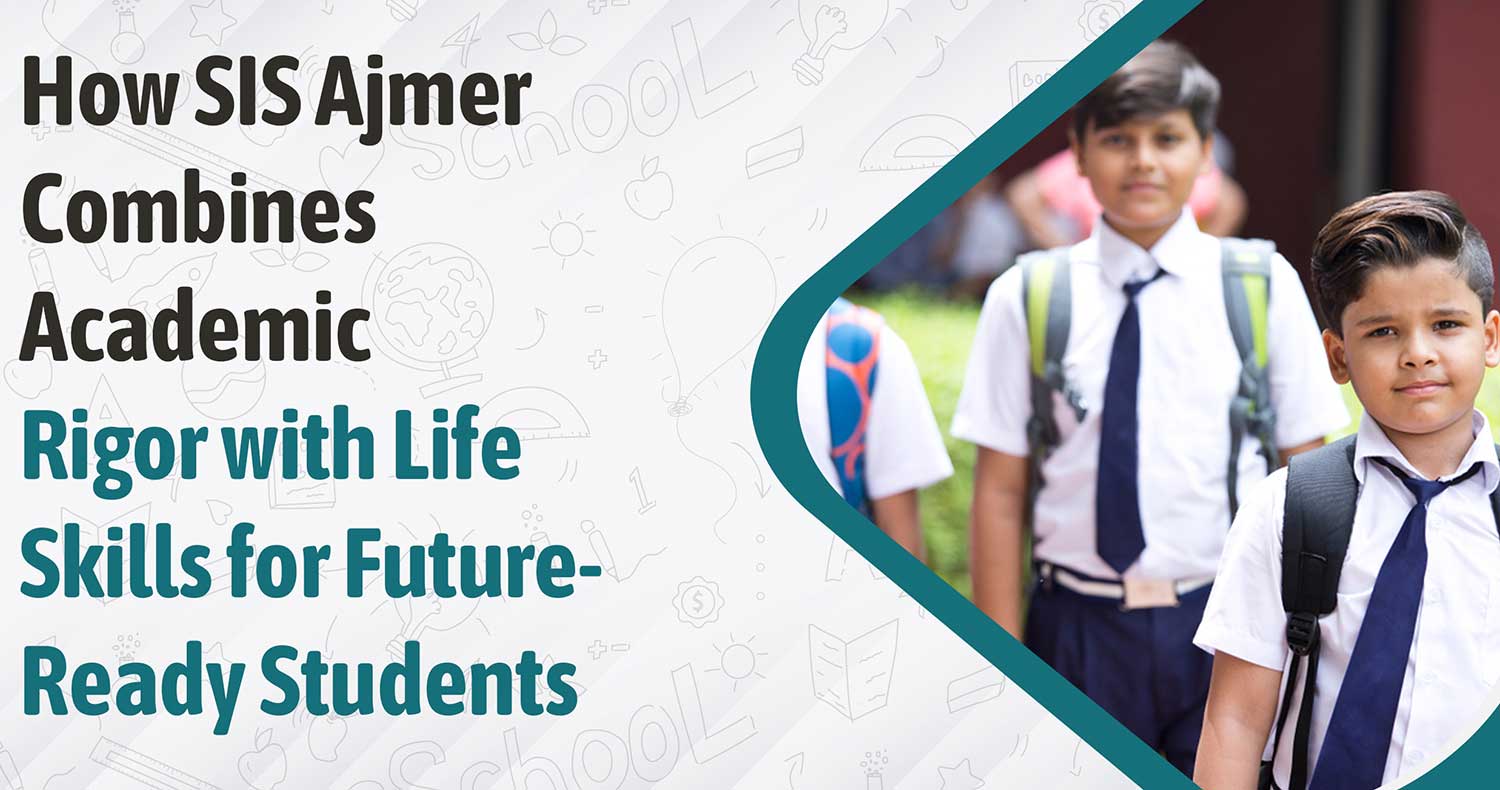
And that’s exactly what Satguru International School (SIS) in Ajmer is all about. SIS is known for its innovative teaching that combines challenging academics with experiential learning, mentoring, leadership, and personal growth. By adding life skills to knowledge, this school helps kids to not just study for exams but for life. Parents seeking a school that focuses on making students future-ready will find SIS to be a place where children are nurtured into self-assured, competent, and empathetic individuals.
Ultimately, education is not about filling a kid’s head with knowledge but lighting a fire of curiosity and molding them to become learners for life. And that is what today’s best schools strive to achieve.