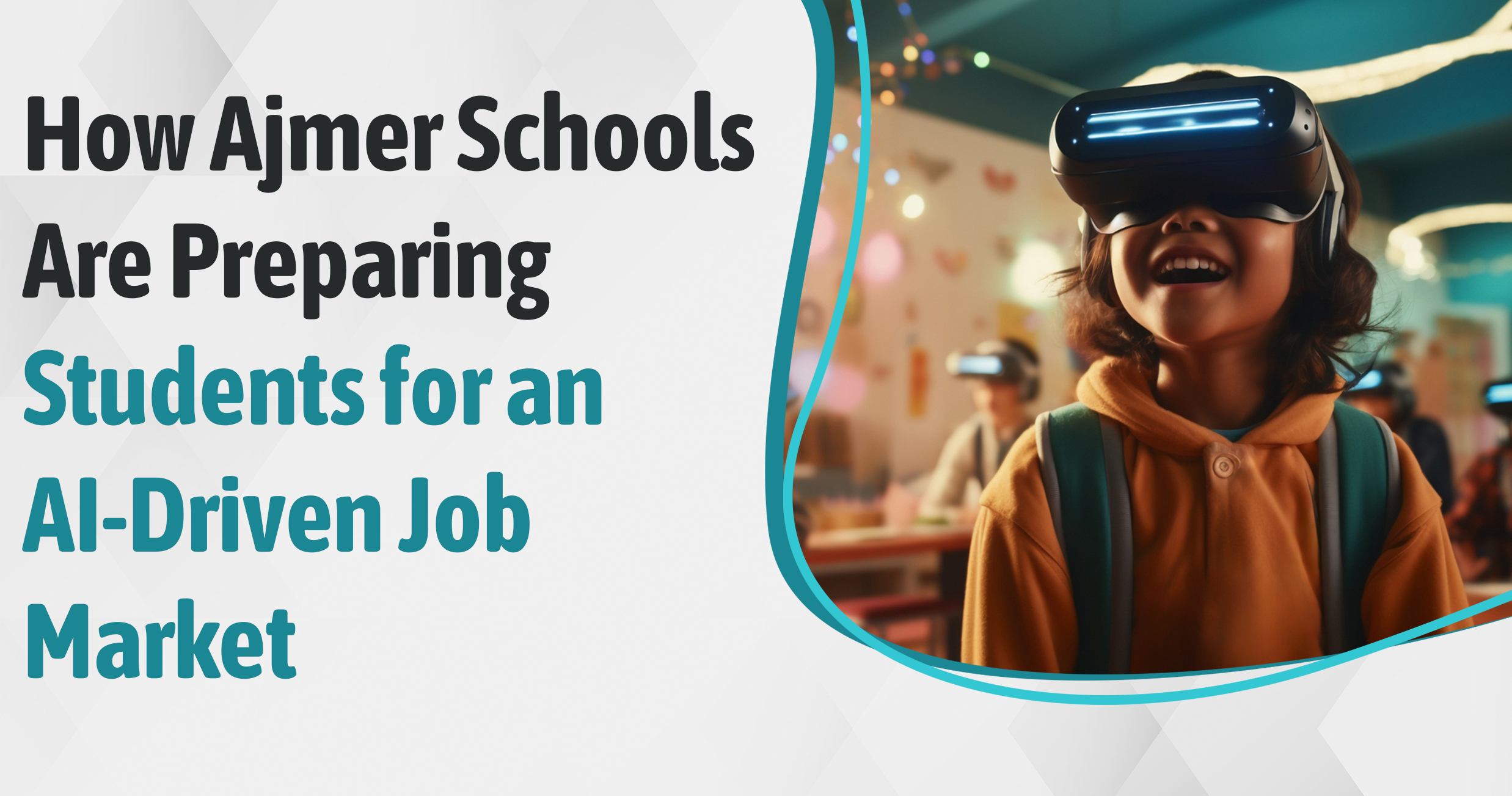
In Ajmer, school conversations now revolve around relevance rather than reputation alone. Families increasingly question whether classroom learning prepares children for employment shaped by algorithms and automated systems, making Artificial Intelligence In Education a key topic in discussions about future-ready learning and modern schooling.
Academic success no longer feels sufficient without intellectual adaptability. Schools that acknowledge this shift focus on judgment, reasoning, discipline, and ethical awareness. Education has become a long-term preparation exercise rather than a short-term academic pursuit.
Artificial intelligence in education appears within Ajmer classrooms through structured thinking exercises rather than isolated technical lessons. Students learn how systems categorise information, identify patterns, and sometimes misinterpret context. This understanding trains discernment instead of passive acceptance. Learners begin questioning outcomes and recognising where human responsibility remains essential.
A second engagement with artificial intelligence in education emerges through subject integration. Mathematics problems involve data reasoning, while humanities discussions examine algorithmic influence on society. Students evaluate outcomes using logic and reflection rather than automated conclusions. This exposure strengthens analytical maturity across age groups.
AI education in Ajmer schools focuses on explanation before application. Teachers introduce concepts gradually, ensuring comprehension develops alongside curiosity. Students explore how learning systems evolve and why oversight remains necessary. Instruction avoids excessive technical terminology, supporting confidence without dependence.
Technology-based learning supports this approach through personalised feedback systems guided by teachers. Digital tools assist tracking progress, yet interpretation remains human-led. A third reference to AI education fits organically here, reinforcing understanding through consistent classroom interaction rather than repetition-driven emphasis.
Preparing students for future jobs now requires emphasis on thinking quality rather than vocational prediction. Ajmer schools increasingly align curricula with transferable skills such as reasoning, clarity, ethical judgement, and collaborative problem solving. These competencies remain stable across industries shaped by automation and artificial intelligence in education practices.
Students engage with scenario-based projects reflecting workplace decision structures. They practise accountability, evidence evaluation, and communication under guidance. Preparing students for future jobs also includes helping learners understand career fluidity without narrowing aspirations prematurely.
Curriculum planning in Ajmer reflects deliberate alignment with artificial intelligence in education outcomes. Learning objectives prioritise reasoning processes, contextual evaluation, and responsible technology use. Assessments focus on explanation pathways rather than outcome replication.
This alignment gains strength through consistent implementation across academic stages.
Such frameworks protect academic integrity while integrating intelligent systems thoughtfully.
Ajmer hosts a wide academic spectrum, including institutions recognised among the top 10 CBSE schools in Ajmer. This variety places responsibility on schools to communicate intent clearly and practise restraint. Families seek assurance regarding attention balance, ethical safeguards, and developmental appropriateness.
After this foundation, accountability becomes visible through engagement practices.
These measures assist families in navigating the broader list of schools in Ajmer with informed confidence.
Education that prepares students for an AI-influenced job market must value judgment over speed. Ajmer schools adopting this perspective equip learners with adaptability rather than dependency. Satguru International School (SIS) Ajmer reflects this measured approach through thoughtful curriculum planning, ethical clarity, and future-oriented academic structures. The institution positions students as reflective decision makers prepared for evolving professional realities.