

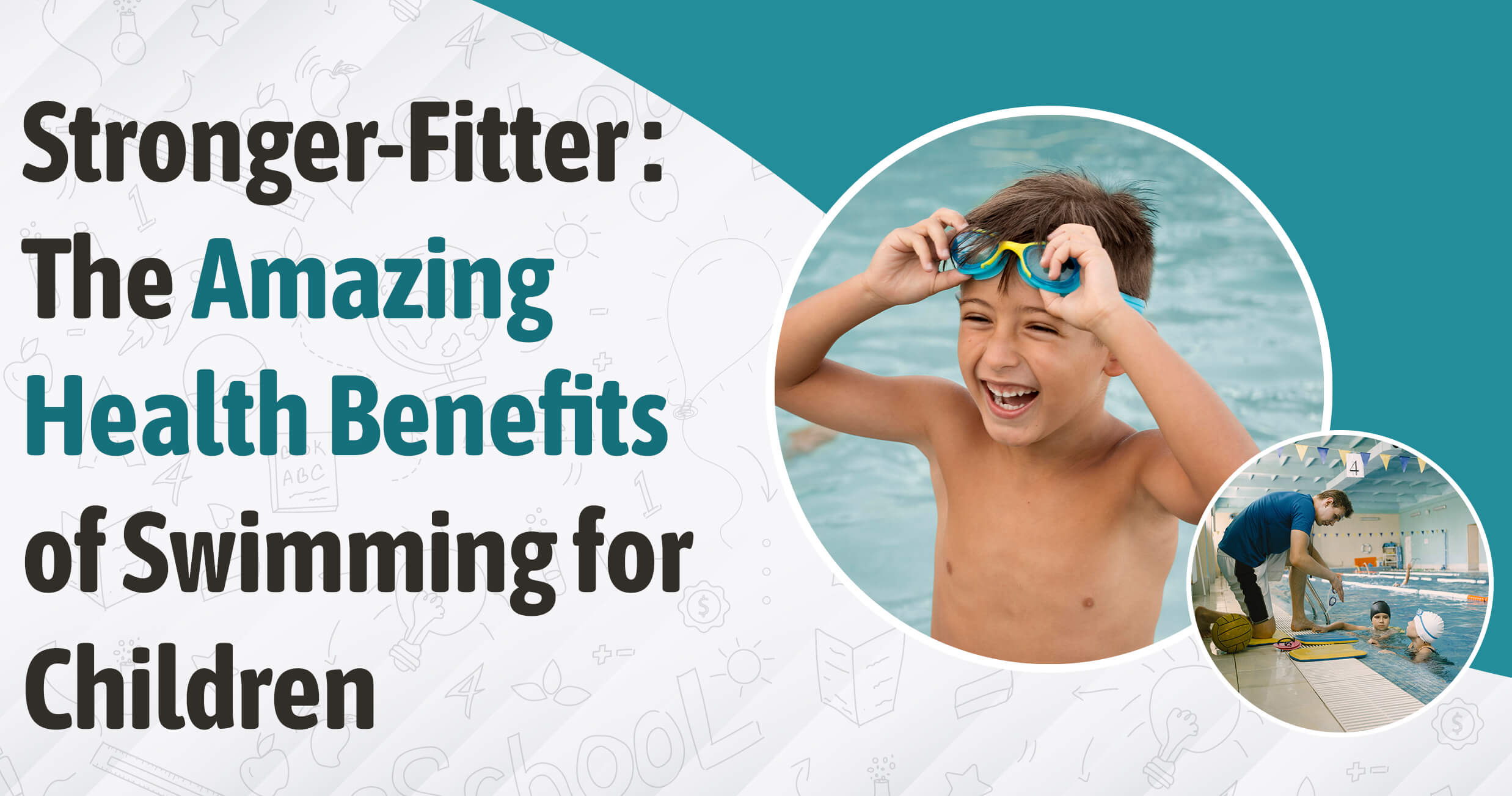
There is something absolutely magical about watching kids in a swimming pool – all the laughter, and the splashes, the daring dives, and those first, awkward strokes that gradually transform into confident glides. For many fathers and mothers, swimming begins as summer fun. But we’re here to tell you that it’s so much more than that. Swimming is one of the most effective methods of helping children become and stay fit, confident, and resilient throughout life.
And the best part is this – they’re generally having so much fun they don’t even notice how good it is for them.
But let’s unpack why this one sport offers so much more than just fun and games.
Unlike most other workouts, which focus on specific muscle groups, swimming uses almost every major muscle in the body simultaneously – arms, legs, back, and the core. It develops strength, stamina, and coordination gently, without impact. For children who are still growing and developing, this can be a huge advantage. No pounding on the joints or risk of strain – just graceful, low-impact resistance against water.
Because of the natural buoyancy of water, kids can build up endurance and not realize they are working out. They jump, kick, float, and twist – all of which help burn calories and improve cardiovascular health.
One of swimming’s less-publicized benefits for kids is its positive effect on mental health. The research is there, suggesting that swimming can help lower stress, lift your mood, and even make sleep more restful. Swimming exercises for children involve such rhythmic, repetitive motion that it can have a calming, even meditative effect on young minds – a great release and therapeutic practice for kids wrestling with anxiety, hyperactivity, and, in some cases, even mild sensory processing challenges.
There is also an element of confidence-building: each stroke that is mastered, each lap that is completed adds to a child’s self-confidence and sense of accomplishment. The emotional resilience that comes with facing that experience pays off long after the pool days are over.
Let’s be honest: We’re in a world of pools, beaches, lakes, and water parks. They also teach kids how to swim, which is one of the most critical life skills. Being taught how to float, tread water, and swim short distances can make a huge difference when it comes to preventing drowning, which is one of the greatest contributors to unintentional injury-related deaths of children.
Lessons of swimming for kids don’t just provide young swimmers with water safety skills at an early age, they also allow them to learn discipline, listening, and following instructions–as well as the give-and-take of structured lessons–in a fun and positive environment.
Exercise for children is correlated with scholastic success, and swimming could be the secret sauce. Because swimming activates both sides of the brain and body, it boosts bilateral coordination, a skill linked to better reading, writing, and more efficient cognitive processing.
In fact, children who swim regularly have been discovered to have faster development in their language skills, fine motor skills, and even numerical understanding. It’s as if you’re working out the brain while allowing the body to have fun.
Have a kid who gets every cold or can’t wind down at bedtime? Swimming might help. Opting to train regularly for something as all-encompassing as swimming is excellent for the immune system, promotes lung capacity, and improves the quality of sleep.
Kids who swim crash quicker, sleep deeper, and wake more refreshed. For developing children whose school schedules are filled and energy is high, this can be huge.
Swimming is different from a sport like a team sport that may dictate body type or competitive spirit. The pool is for everyone, whether they are a shy child, a super energetic kid, an athlete, or a beginner. With their individualized goals and benchmarks, children move at their own pace.
Swimming classes for kids also foster friendships. Kids bond through shared experiences, and swimming in a group lesson or at a swim meet, or even just playing in the pool, is lots of fun. And those friendships? In many instances, they extend far beyond the swimming lanes.
The best thing about swimming is that it’s a skill for life. Children who come to love the water early on are more likely to adopt swimming as an exercise later in life, through adolescence and into adulthood. It’s one of the few that can be modified through the years, from the physical condition of your body to your fitness level – and that’s especially good for long-term health and wellness.
So, whether your child is sprinting freestyle or barely mastering the float, the benefits extend far beyond the pool.
In this age of screens and inactivity, urging your son or daughter to join the swim team is one of the greatest things you can do for his/her health and well-being. It’s not just about kids’ swimming benefits; it’s about building a foundation for a lifetime of good health and optimal fitness.
And in case you are looking for a school that realizes the value of holistic emphasis of education – mixing up academics with co-curriculars like swimming – Satguru International School in Ajmer is one name that you should keep in your consideration list. Catering for all areas of a child’s life, they want to develop not just their minds but their bodies and souls.
So, the next time your child is playing in a pool, swim. You’re not just watching fun. You’re witnessing growth.
Are you ready to give your child a better future? Let swimming be the first stroke on the way.