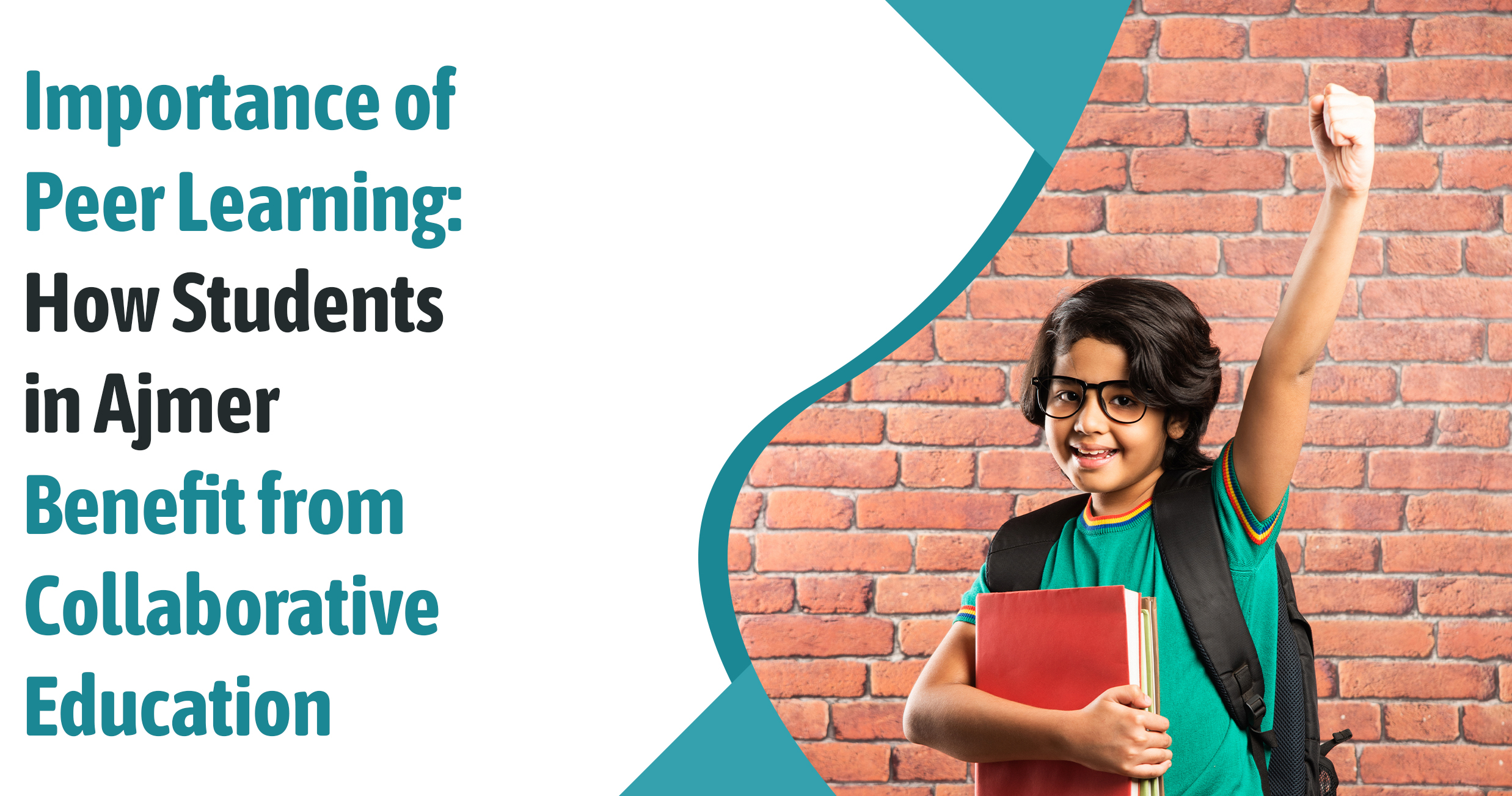
In classrooms across Ajmer, a quiet shift is taking place. Many schools are moving beyond traditional lectures. They are now using peer to peer teaching, where students help each other learn. This approach is changing how children understand, remember, and enjoy their lessons.
For parents exploring the best schools in Ajmer, it is important to know how this method supports your child. It brings both academic and emotional benefits.
Peer learning means students learn with and from each other. It includes working in pairs, group activities, or explaining ideas to classmates. This method keeps students active in the learning process. It also helps them think more clearly and deeply.
Schools in Ajmer are now creating learning environments where students support each other. This helps them move beyond simple memorizing and build real understanding.
Peer learning benefits students in many ways. Studies show that students who often take part in peer-based activities do better in class. They also score higher in tests.
A study by the Education Endowment Foundation found strong results. Students in peer learning programmed made five months of extra progress in one year. This improvement was clear in subjects like math’s and science. In these areas, discussing ideas helps students understand better.
At the primary level, peer learning is very powerful. Younger children often learn faster when another child explains things. They feel more relaxed and ask more questions.
In primary schools in Ajmer, students working in pairs remember more. In one local study, schools saw that peer learners had 15% better vocabulary recall than those learning alone.
There are emotional benefits too. Children feel proud when they explain something to a classmate. This small confidence boost can stay with them as they grow.
Peer learning is part of a larger method called cooperative learning. In this approach, students work in small groups. Each child completes their own task, but also helps the group succeed.
This method prepares students for life outside school. In most jobs, people need to work together. Learning how to cooperate from a young age gives children a strong future advantage.
Schools in Ajmer are now using this method in subjects like science. Students do experiments together. This hands-on method makes learning more interesting and less stressful. It also helps students who are shy or struggling.
Children often feel closer to classmates than to adults. They feel more relaxed when they see others facing the same challenges.
Collaborative learning advantages include lower anxiety and higher motivation. Students form stronger friendships. This creates a healthier classroom environment.
Many parents in Ajmer are already seeing the change. One parent shared how their daughter was once quiet and unsure. After working in learning groups, she became more confident. Stories like this are becoming more common. When students help others, they grow too.
Many schools in Ajmer, like Satguru International School, are already using peer-to-peer teaching with great success. Teachers guide the lessons but give students space to explore ideas. This helps students take more responsibility for their learning.
A 2024 education report in Ajmer showed clear results. Schools using peer learning had 12% higher attendance. Students were also 18% more likely to speak during lessons.
These numbers show one thing clearly. When students are part of the process, they show more interest, energy, and focus.
If you are looking for the right CBSE school in Ajmer, ask how the school supports group learning. This approach is becoming a key part of quality education. It helps students grow as thinkers, learners, and friends.
At the primary level, peer learning habits begin early. Children learn that their voice matters. They also learn that helping others is a strength.
In today’s world, these skills are not optional. Peer learning is shaping smarter and more confident children. It is also shaping better schools.