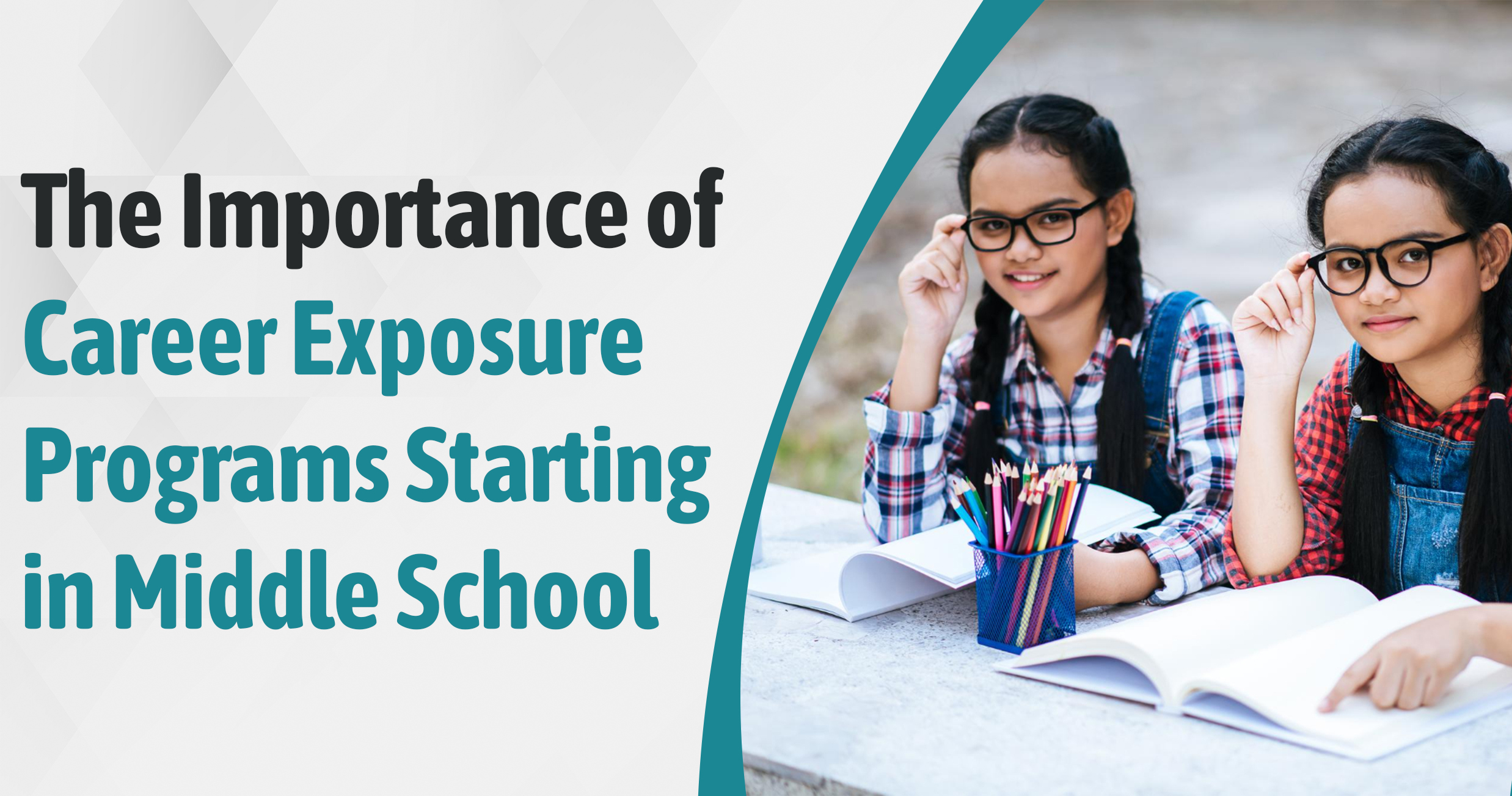
Middle school marks a turning point where curiosity begins shaping identity, ambition, and long-term self-belief. At this age, students quietly question relevance, purpose, and their place within future society.
Structured exposure to careers answers these questions with context, not pressure. Early awareness builds confidence, discipline, and direction before confusion hardens into anxiety. This is where education stops being abstract and begins feeling personally meaningful.
Career guidance for students works best when minds remain open, flexible, and unburdened by examination pressure. By middle school, interests form patterns through behaviour, not verbal expression. Early support helps educators identify these patterns with sensitivity and academic alignment.
This stage allows students to explore aptitude without labelling or prematurely narrowing ambition. Career guidance for students here supports curiosity while preserving emotional safety. Delayed exposure often forces rushed decisions driven by marks, peer influence, or parental anxiety.
Effective career guidance programs align information delivery with psychological readiness and learning maturity. In CBSE schools in Ajmer, middle school learners process careers best through observation, reflection, and guided discussion.
These programs introduce roles through stories, case studies, and interdisciplinary links. Career guidance for students becomes experiential rather than instructional. This approach strengthens comprehension while avoiding fear-driven comparisons or unrealistic expectations.
Career guidance programs also help teachers frame academic subjects as functional life tools. Students understand relevance when mathematics, science, and language connect with real professions.
Career exploration activities must feel exploratory, not evaluative, to remain effective. When well designed, these activities quietly strengthen self-awareness and independent thinking.
Such exposure gives career guidance for students a practical foundation rooted in lived classroom experience. Activities support reflection rather than judgement.
Well-structured career exploration activities may include:
These experiences develop respect for diverse professions without ranking success hierarchies.
Career counseling in schools works best as a continuous academic practice, not a single intervention. Middle school provides the ideal entry point for this continuity.
Career guidance for students evolves through observation, dialogue, and progressive understanding. Counselling here focuses on self-knowledge, not selection.
Career counseling in schools also equips parents with shared language and realistic expectations. Open communication reduces future conflict surrounding subject choices and academic streams.
This approach honours emotional development while preserving student agency.
The importance of career education lies in linking effort with meaning. Students perform better when learning connects with future contribution and personal relevance.
Career guidance for students at this stage strengthens motivation and classroom engagement. Subjects gain value beyond grades.
The importance of career education also includes social awareness and ethical responsibility. Students learn how professions impact communities, systems, and public well-being.
This understanding nurtures empathy, discipline, and long-term resilience.
Schools play a central role in shaping informed ambition through curriculum design and teacher mentorship. Middle school exposure requires intentional planning across subjects and activities.
Career guidance for students succeeds when embedded into a daily learning culture. It does not function as an isolated department.
Within well-planned ecosystems, career guidance programs create coherence between academics, skills, and values. This approach prepares students for future transitions without emotional disruption.
Schools recognised among the top 10 schools in Ajmer increasingly adopt such integrated frameworks. Progressive CBSE schools in Ajmer also acknowledge early exposure as essential for holistic development.
Career exposure during middle school respects how children think, question, and grow. It strengthens academic purpose while preserving emotional balance and curiosity. When implemented with care, career guidance for students becomes a foundation for lifelong learning and confidence.
Satguru International School (SIS) Ajmer demonstrates how early career awareness can be introduced with sensitivity, structure, and educational integrity, supporting students long before critical decisions arise.